
How to Clean Your Car at Home: Complete DIY Guide (2026)
Automatic car washes are convenient, but they're slowly destroying your car's paint. Those spinning brushes? They're scratching your clear coat with every wash. The harsh chemicals? They're stripping your protective wax. And that "clean" car? It's covered in microscopic swirl marks.
The good news? You can clean your car better at home—and it's easier than you think.
As a professional detailer in Miami, I've seen thousands of cars damaged by automatic car washes. In this guide, I'll show you exactly how to clean your car the right way, protect your paint, and save money in the process.
Why You Should Stop Using Automatic Car Washes
Before we dive into the how-to, let's talk about why automatic car washes are bad for your car.
The Problems with Automatic Car Washes:
1. Spinning Brushes Scratch Your Paint
Those big spinning brushes touch 50-100 cars per day. They accumulate dirt, brake dust, and debris from every car. When they touch your paint, they're essentially sanding it with contaminated brushes. Over time, this creates swirl marks—those circular scratches you see in direct sunlight.
2. High-Pressure Water Damages Seals
Most automatic car washes use 3,000+ PSI pressure washers. That's way too high for automotive paint and seals. High pressure forces water into places it shouldn't go (door seals, window seals, trim) and can even chip paint.
3. Harsh Chemicals Strip Protection
Car washes use industrial degreasers because they're cheap and cut through dirt fast. The problem? They also strip your wax and protective coatings in one wash. After a few car wash visits, your paint is completely unprotected from UV rays, salt air, and environmental damage.
4. They Don't Actually Clean Well
Ever notice your car still has dirt in the crevices after a car wash? That's because automatic washes focus on speed, not quality. They miss door jambs, wheel wells, and all the detail areas where dirt accumulates.
What You'll Need to Clean Your Car at Home
The good news? You don't need expensive equipment to clean your car properly. Here's what you'll need:
Essential Supplies (Total: $60-80)
Washing:
• 2 buckets ($10-15)
• Grit guards for buckets ($10)
• Microfiber wash mitt ($8-12)
• pH-neutral car wash soap ($12-15)
• Large microfiber drying towel ($10-15)
Protection:
• Spray wax or sealant ($15-25)
• T ire shine ($8-12)
Optional but Recommended:
• Garden hose with spray nozzle ($15-25)
• Wheel brush ($8-12)
• Glass cleaner ($8-10)
Where to Buy: Amazon, AutoZone, Advance Auto Parts, or any auto parts store.
Step-by-Step: How to Wash Your Car at Home
Step 1: Choose the Right Location and Time
Location: Park in the shade or a covered area. Never wash in direct sunlight—water evaporates too quickly and leaves mineral deposits that etch into your paint.
Time: Early morning or evening when it's cooler. In Florida (where I detail), washing in midday sun is a recipe for water spots.
What you need: Access to water (garden hose) and a flat surface (driveway, parking lot).
Step 2: Rinse Your Car Thoroughly
Before you touch your car with a wash mitt, rinse it completely with water. This removes loose dirt, dust, and debris that could scratch your paint during washing.
How to do it:
1.Start from the top (roof) and work your way down
2.Use a garden hose with a spray nozzle
3.Pay special attention to wheel wells, lower panels, and behind the wheels
4.Rinse for 2-3 minutes—don't rush this step
Pro tip: If you have a pressure washer, use 1,200-1,500 PSI max. Anything higher can damage seals and paint.
Step 3: Use the Two-Bucket Method
This is the most important technique for preventing scratches. Here's how it works:
Bucket 1: Soapy water (car wash soap + water)
Bucket 2: Clean rinse water
The process:
1.Fill bucket 1 with car wash soap and water (follow product instructions)
2.Fill bucket 2 with clean water only
3.Place grit guards in both buckets (they trap dirt at the bottom)
Why this matters: Every time you wash a section of your car, your mitt picks up dirt. If you dip that dirty mitt back into soapy water, you're just spreading dirt around. The two-bucket method keeps your wash water clean.
Step 4: Clean Your Wheels and Tires
Wheels are the dirtiest part of your car (brake dust, road grime, tar). Always wash them last.
How to clean wheels:
1.Spray wheel cleaner on wheels and tires
2.Let it sit for 1-2 minutes (read product instructions)
3.Use a wheel brush to scrub spokes and barrel
4.Use your wash mitt for the tire sidewalls
5.Rinse thoroughly
Pro tip: Never use the same wash mitt for wheels and paint. Brake dust is abrasive and will scratch your paint.
Step 5: Wash Your Car (Top to Bottom)
Now it's time to actually wash. Follow this order:
Order of washing:
Pre: Wheels and tires (firstthey're the dirtiest)
1.Roof
2.Windows
3.Hood
4.Trunk
5.Upper doors
6.Lower doors
7.Front bumper
8.Rear bumper
The technique:
1.Dip your wash mitt in soapy water (bucket 1)
2.Wash one section using straight lines (not circles)
3.Rinse the mitt in clean water (bucket 2)
4.Squeeze out the dirty water
5.Repeat for the next section
Pro tip: Use straight lines instead of circular motions. If you do create any scratches, straight lines are less visible than circular swirls.
Step 6: Rinse Everything
After washing, rinse your entire car thoroughly. Start from the top and work down, just like you did in step 2.
What to look for:
•No soap residue (especially in crevices)
•No suds in door jambs or trim
•Clean water running off the car
Pro tip: Open your doors and rinse the door jambs. Most people skip this, but it makes a huge difference in the overall clean look.
Step 7: Dry Your Car Properly
This is where most people make mistakes. Never let your car air dry—it will leave water spots, especially if you have hard water (like we do in Florida).
How to dry:
1.Use a large, plush microfiber drying towel
2.Start from the top and work down
3.Use a blotting/patting motion (don't drag the towel)
4.Wring out the towel when it gets saturated
5.Pay attention to mirrors, door handles, and trim (water hides there)
Pro tip: For crevices and tight spots, use compressed air or a leaf blower to blow water out. This prevents water spots in hard-to-reach areas.
Step 8: Apply Protection (Wax or Sealant)
Now that your car is clean and dry, it's time to protect it. This step is optional but highly recommended—it's what keeps your car looking good between washes.
Options:
Spray Wax (Easiest):
•Spray on, wipe off
•Lasts 1-2 months
•Takes 10-15 minutes
•Good for beginners
Spray Sealant (Better):
•Spray on, wipe off
•Lasts 3-6 months
•Takes 15-20 minutes
•Better protection
Paste Wax (Traditional):
•Apply with applicator pad, buff off
•Lasts 2-4 months
•Takes 30-45 minutes
•Deep, warm shine
How to apply spray wax/sealant:
1.Spray product onto a clean microfiber towel (not directly on paint)
2.Wipe onto paint in straight lines
3.Let it sit for 1-2 minutes (read instructions)
4.Buff off with a clean microfiber towel
5.Work in 2x2 foot sections
Pro tip: Apply protection to your windows too (except the windshield if it affects visibility). It helps water bead off and makes cleaning easier.
Step 9: Dress Your Tires
The final touch: tire shine. This makes your tires look dark and new.
How to apply:
1.Make sure tires are clean and dry
2.Spray tire shine onto an applicator pad (not directly on tires)
3.Wipe onto tire sidewalls evenly
4.Let it sit for 5 minutes
5.Wipe off excess with a towel
Pro tip: Don't spray tire shine directly on tires—it gets on your wheels and attracts dirt. Always apply with an applicator pad.
Step 10: Clean Your Windows
The last step: crystal-clear windows.
How to clean windows:
1.Spray glass cleaner on a microfiber towel (not directly on glass)
2.Wipe windows in straight lines
3.Flip the towel to a dry side and buff
4.Roll windows down slightly and clean the top edge (most people miss this)
Pro tip: Use a separate towel for windows. If you use the same towel you used for wax, you'll get streaks.
How Long Does This Take?
First time: 1.5-2 hours (you're learning)
Once you're comfortable: 45-60 minutes
Quick maintenance wash: 30 minutes
Yes, it's longer than a 10-minute car wash. But you're doing it right, and your car will look significantly better.
How Often Should You Wash Your Car?
It depends on where you live and how you use your car.
General rule: Every 2 weeks
Wash more often if:
•You live near the ocean (salt air)
•You park under trees (sap, bird droppings, pollen)
•You drive in rain frequently (water spots)
•You live in a dusty area
Wash less often if:
•You garage your car
•You live in a dry climate
•You don't drive much
In South Florida (where I detail): I recommend every 1-2 weeks because of salt air, humidity, and frequent rain.
Common Mistakes to Avoid
1. Using Dish Soap
Dish soap (Dawn, Palmolive) is designed to strip grease and oil. It will strip your wax and protective coatings too. Always use pH-neutral car wash soap.
2. Washing in Direct Sunlight
Water evaporates too quickly in direct sun, leaving mineral deposits that etch into your paint. Always wash in the shade.
3. Using One Bucket
If you dip your dirty mitt back into soapy water, you're just spreading dirt around. Always use the two-bucket method.
4. Letting Your Car Air Dry
Air drying leaves water spots, especially with hard water. Always dry with a microfiber towel.
5. Using Old T-Shirts or Towels
Regular towels and t-shirts are abrasive and will scratch your paint. Always use microfiber towels designed for cars.
6. Washing Wheels First
Wheels are the dirtiest part. If you wash them first, you'll splash dirty water onto your clean paint. Always wash wheels last.
Cost Comparison: DIY vs. Car Wash
Let's break down the numbers:
Automatic Car Wash:
•Cost per wash: $15-30
•Frequency: Every 2 weeks
•Annual cost: $390-780
•Damage to paint: Swirl marks, stripped wax, potential scratches
DIY at Home:
•Initial investment: $60-80 (supplies)
•Cost per wash: $0.50-1 (soap and water)
•Frequency: Every 2 weeks
•Annual cost: $73-106
•Benefit: Better clean, protected paint, no damage
Savings: $300-700 per year
When to Use a Professional Detailer
DIY washing is great for maintenance, but there are times when you should hire a professional:
Hire a detailer when:
•Your car hasn't been detailed in 6+ months
•You have swirl marks or scratches that need correction
•Your interior needs deep cleaning (stains, odors, pet hair)
•You're selling your car and want maximum value
•You don't have time or equipment
What a professional detailer does that you can't easily do at home:
•Paint correction (removes scratches and swirls)
•Clay bar treatment (removes bonded contaminants)
•Ceramic coating application (2-5 years of protection)
•Hot water extraction for carpets and seats
•Engine bay cleaning
Think of it this way: DIY washing is like brushing your teeth. Professional detailing is like going to the dentist. You need both.
Frequently Asked Questions
Can I use a pressure washer?
Yes, but keep it under 1,500 PSI. Higher pressure can damage seals, strip paint, and force water where it shouldn't go.
What's the best car wash soap?
Look for pH-neutral soap that's designed for cars. Good brands: Meguiar's, Chemical Guys, Griot's Garage, Turtle Wax. Avoid dish soap.
How do I remove water spots?
Fresh water spots: Wipe with a damp microfiber towel. Stubborn water spots: Use a water spot remover or diluted white vinegar (50/50 with water). Etched water spots: Requires professional paint correction.
Can I wash my car with just water?
Water alone won't remove oils, road grime, or contaminants. You need soap to break down these substances. However, a quick water rinse between washes is fine.
Should I wax or seal my car?
Both provide protection. Wax gives a warm, deep shine and lasts 2-4 months. Sealant gives a glossy shine and lasts 4-6 months. For beginners, I recommend spray sealant—it's easier to apply and lasts longer.
What if I don't have a garage or driveway?
Look for self-service car washes that have bays with pressure washers and foam brushes. You can bring your own supplies and use their water. Just avoid using their brushes (they're contaminated).
Final Thoughts
Washing your car at home isn't just about saving money—it's about protecting your investment. Automatic car washes are convenient, but they're slowly destroying your paint with every visit.
By learning to wash your car properly, you'll:
•Avoid swirl marks and scratches
•Maintain your car's protective coatings
•Save $300-700 per year
•Keep your car looking newer for longer
•Increase resale value
The first time will take 1.5-2 hours. But once you get the hang of it, you'll be done in 45-60 minutes. And your car will look better than it ever did coming out of an automatic car wash.
Start this weekend. Grab the supplies, follow this guide, and see the difference for yourself.
About the Author
Alejandro is a professional mobile detailer based in Miami, Florida, specializing in paint correction, ceramic coatings, and interior restoration. With years of experience detailing luxury vehicles, he's seen firsthand the damage caused by automatic car washes and is passionate about educating car owners on proper care techniques.
The Real Cost of a "Cheap" Detail: What I Find After They’re Done
It’s a tempting offer: a “full detail” for $100. In a world of $500 ceramic coatings and multi-step paint corrections, it sounds like a bargain. But as a professional who is often hired to fix the aftermath of these “bargains,” I can tell you the real cost is far higher. A cheap detail isn’t just a bad service; it’s often an expensive down payment on future repairs.
What you can’t see is the damage being inflicted on your vehicle’s surfaces. I’m not just talking about missed spots. I’m talking about permanent, costly harm that turns a quick saving into a four-figure problem. Here’s a look at what I find after the cheap detailers are done, backed by industry research and real-world costs.
The Most Common Damage: Swirl Marks and Scratches
The most immediate and visible damage from a cheap detail is to your car’s paint. Swirl marks—those spiderweb-like scratches that are painfully obvious in direct sunlight—are almost always the result of improper washing and drying techniques. These aren’t just cosmetic annoyances; they are physical scratches in your vehicle’s clear coat .
How it Happens:
•Contaminated Wash Mitts: Using one or two dirty wash mitts for the entire car, dragging dirt and grit from the rocker panels all over the hood and doors.
•Abrasive Towels: Using low-quality, non-automotive towels that are not designed to lift dirt safely.
•Improper Drying: Wiping a car dry in aggressive circular motions instead of gently patting or using a dedicated drying towel.
Over time, this repeated damage can lead to clear coat deterioration and even failure.
A professional one-stage paint correction to remove the damage from a single bad detail can cost 5 to 15 times more than the cheap detail itself.
The Hidden Danger: Toxic and Damaging Chemicals
To keep costs down, cheap detailers often rely on bulk, industrial-strength chemicals that are not only harmful to your vehicle but also to your health.
Interior Damage
Many low-cost interior “protectants” are silicone-based dressings that create a greasy, artificial shine. These products do more harm than good:
•They attract dust and create a film that is difficult to remove.
•They can accelerate the cracking of dashboards and vinyl by trapping heat and leaching plasticizers.
•They release Volatile Organic Compounds (VOCs) like benzene and toluene into your cabin, which are known to cause respiratory irritation and other health issues . A 2024 study found that millions of Americans breathe in carcinogenic chemicals daily from the materials inside their cars, a problem exacerbated by cheap, unregulated cleaning products .
Exterior Damage
•Acidic Wheel Cleaners: Harsh, non-pH-balanced wheel cleaners can strip the protective finish from your wheels, leading to pitting and corrosion.
•Solvent-Based Tire Shines: These products can cause the rubber to dry out and crack over time, a phenomenon known as “tire blooming” or browning .
The Illusion of Clean: Hiding, Not Solving
A common tactic is to hide dirt rather than remove it. Greasy interior dressings are slathered over dirty dashboards, and thick, silicone-based tire shines are applied to uncleaned tires. The car looks shiny for a day or two, but the underlying problems remain. The dirt is still there, now mixed with a sticky chemical that makes it even harder to clean properly later.
The Real Cost: A Summary
When you opt for a cheap detail, you’re not paying for a lesser version of a professional service. You are often paying to have your vehicle systematically damaged. The real cost isn’t the $100 you hand over; it’s the accumulation of future repairs and diminished value.
•Paint Correction: $500 - $1,500
•Interior Repair: $300 - $1,000+ for cracked dashboards or faded leather
•Wheel Refinishing: $150 - $300 per wheel
•Diminished Resale Value: A vehicle with swirled paint and a damaged interior is worth significantly less.
As a professional, my work is not just about cleaning; it’s about preservation. It’s about using the right chemistry, the right techniques, and the right systems to protect your investment. Before you’re tempted by the next $100 “full detail” offer, ask yourself: are you paying for a cleaning, or are you paying for future damage?
References
[1] Downtown Auto Body. (2025, May 29). Preventing and Addressing Swirl Marks in Auto Paint.
[2] Reddit r/AutoDetailing Community. (n.d.). Car wash membership- worth the swirl marks?
[3] Detailed Image. (2023, April 20). How Much Should Paint Correction Cost?
Why Headlight Restoration is a Non-Negotiable Safety Service
When you think about getting your car detailed, you probably picture a glossy, mirror-like paint finish. But what about your headlights? Over time, the clear, protective layer on your headlights succumbs to the relentless Miami sun, turning yellow, foggy, and oxidized. This isn't just a cosmetic issue—it's a critical safety hazard.
Faded headlights can reduce nighttime visibility by as much as 70%, making it harder to see the road, pedestrians, and potential hazards. At Ale's Mobile Detailing, we see headlight restoration as more than just a cosmetic fix; it's an essential safety service. Let's break down the science and the solution.
Why Do Headlights Turn Yellow? The Science of Oxidation
Modern headlights are made from a durable plastic called polycarbonate. From the factory, this plastic is coated with a UV-protective clear coat. However, constant exposure to the sun's ultraviolet rays, road debris, and harsh chemicals eventually breaks down this protective layer. The polycarbonate itself then begins to oxidize, creating that ugly, hazy, and yellowed appearance.
This oxidation scatters the light from your bulbs, drastically reducing the brightness and clarity of your headlight beam. It's like trying to see through a foggy window at night.
The DIY Kits vs. Professional Restoration: A Word of Caution
You’ve seen them at the auto parts store: the “miracle” headlight restoration kits that promise a quick fix. While these kits can provide a temporary improvement, they often fail to address the root cause of the problem and can sometimes even make it worse.
The Problem with DIY Kits:
1.Incomplete Sanding: Most kits don't provide the right variety of sanding grits to fully remove the deep, oxidized layer of plastic. This leaves a hazy, uneven surface.
2.Lack of Proper Tools: Achieving a flawless, optically clear finish requires a machine polisher and the right pads—tools the average car owner doesn't have.
3.Inadequate Protection: The final, and most critical, step is applying a new, durable UV-protective sealant. The wipes included in most DIY kits offer minimal protection, meaning your headlights will likely re-yellow in just a few months.
The Professional Process: A Multi-Stage Restoration
A professional headlight restoration is a meticulous, multi-stage process that permanently removes oxidation and protects the headlight for years to come.
Step 1: Surface Preparation We begin by thoroughly cleaning the headlight and surrounding paint. We then carefully tape off all adjacent panels to protect your car's paint from the sanding process.
Step 2: Multi-Stage Wet Sanding This is the most critical step. We use a series of progressively finer sanding grits (from 800 up to 3000) to methodically remove the entire oxidized layer of polycarbonate. This process reveals a fresh, clean surface, but leaves the headlight with a uniform, frosted appearance.
Step 3: Compounding and Polishing Using a machine polisher, we use a specialized compound to remove the sanding marks, followed by a fine polish to restore perfect optical clarity. The headlight goes from frosted to crystal-clear during this stage.
Step 4: Applying Professional-Grade UV Protection With the lens now perfectly clear, we apply a durable, long-lasting ceramic or UV-cured sealant. This new protective layer is far superior to factory coatings and will resist yellowing and oxidation for years, not months.
The Result: More Than Just Looks
The difference is, quite literally, night and day. A professional restoration doesn't just make your car look newer; it restores its nighttime performance to factory-new levels, ensuring the safety of you and your family.
Don't compromise on safety. If your headlights are looking foggy or yellow, it's time to see clearly again. Contact Ale's Mobile Detailing today for a free quote on our professional headlight restoration service. It’s one of the most impactful and affordable ways to improve your car's appearance and, more importantly, your safety on the road.
How Long Does a Professional Ceramic Coating Really Last in Miami?
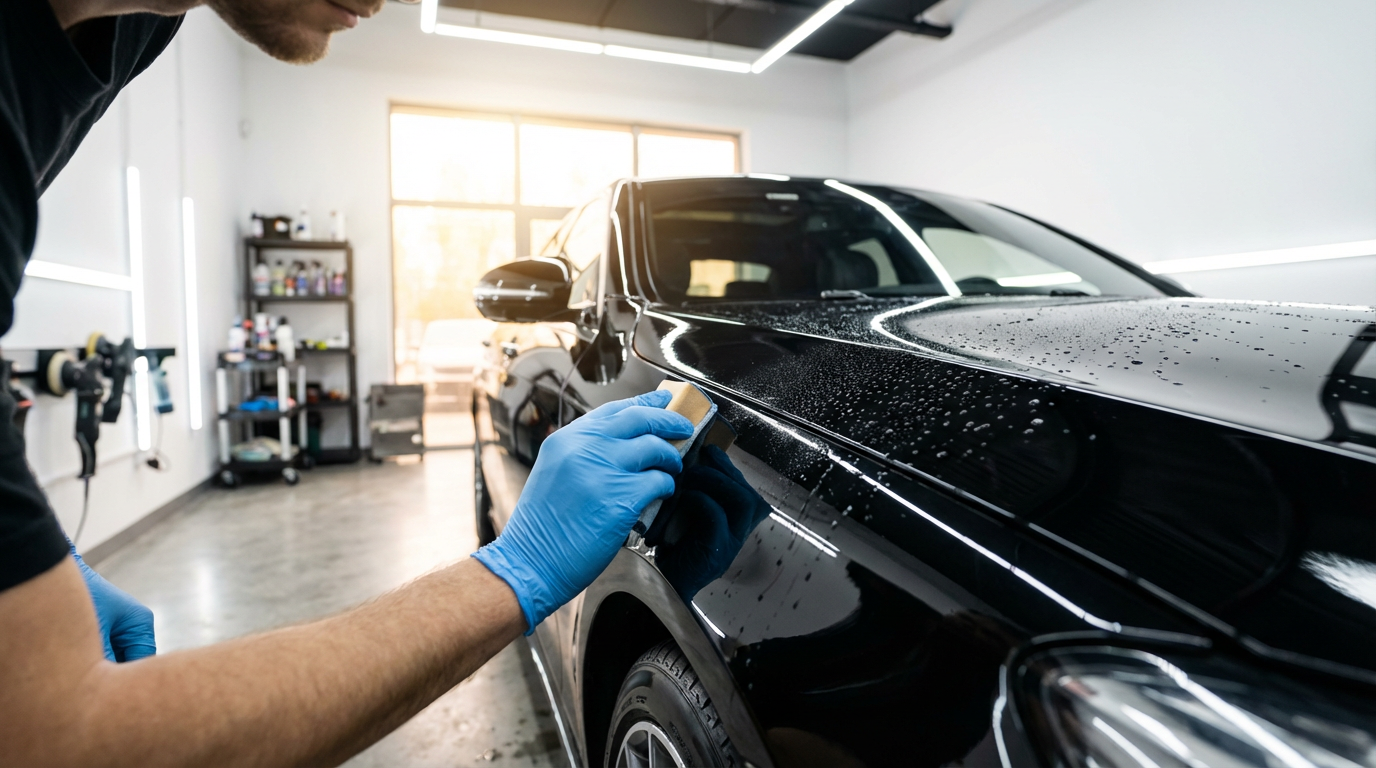
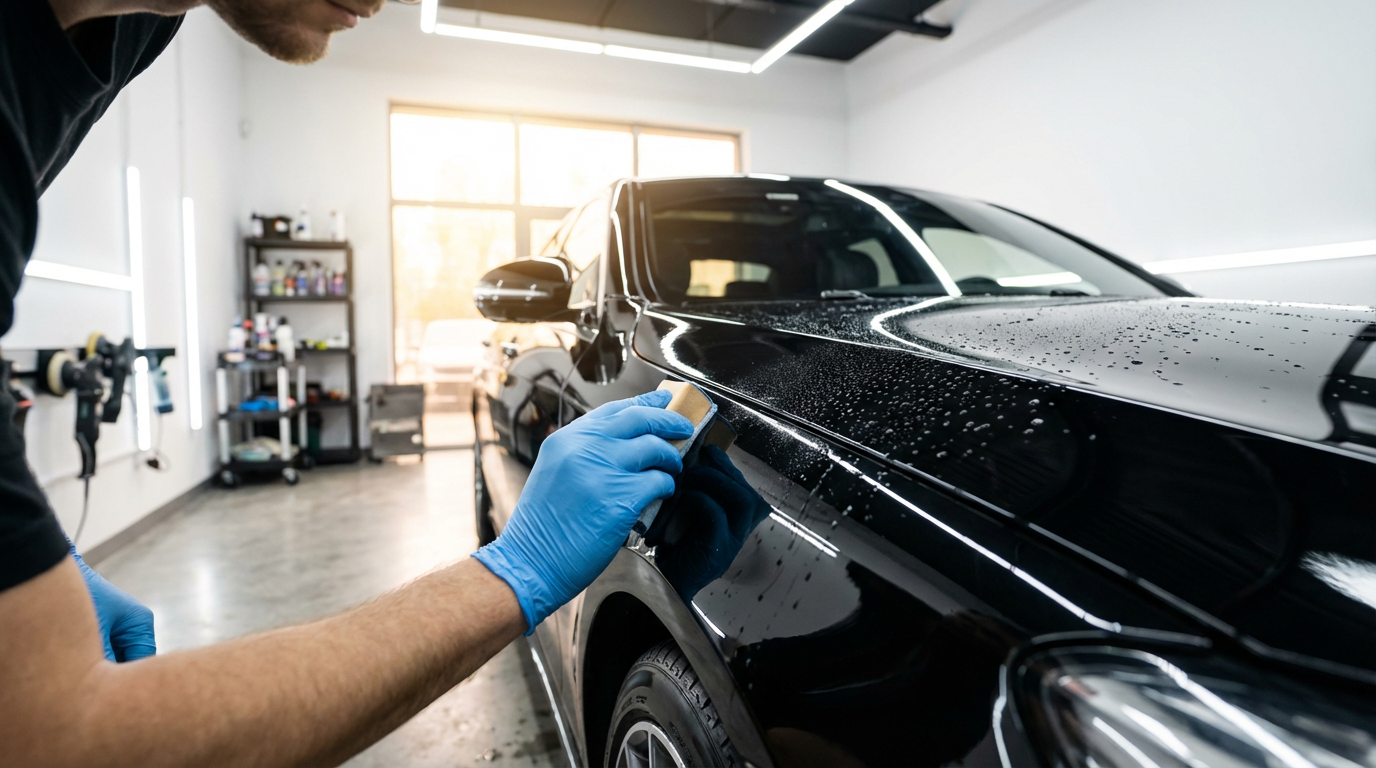
Living in Miami means enjoying beautiful sunny days, stunning beaches, and a vibrant culture. However, that same environment we love can be incredibly harsh on our vehicles. The relentless sun, salty air, and high humidity are constantly working to dull your car’s shine and damage its paint. For car owners who take pride in their ride, the question isn’t just how to protect it, but how to get the most durable, long-lasting protection available.
Enter the ceramic coating—a revolutionary solution in the world of car detailing. But with so many claims and products on the market, it’s hard to know what to believe. How long does a ceramic coating actually last in the demanding Miami climate? As detailing experts, we’re here to give you the complete breakdown.
What is a Ceramic Coating, Anyway?
Before we talk about longevity, it’s important to understand what a ceramic coating is. Unlike traditional carnauba wax, which simply sits on top of your paint and wears away after a few weeks, a ceramic coating is a liquid polymer that chemically bonds with your vehicle’s factory paint. This creates a semi-permanent, sacrificial layer of protection that is significantly harder and more durable than wax.
Think of it as a glossy, ultra-hard shield for your car. This shield provides several key benefits that are especially valuable for Miami drivers:
•UV Protection: It acts like a powerful sunscreen, preventing the sun's harmful UV rays from oxidizing and fading your paint.
•Chemical Resistance: It protects against acidic contaminants like bird droppings, bug splatter, and acid rain.
•Hydrophobic Properties: It creates an intensely water-repellent surface, meaning water beads up and rolls off, taking dirt and grime with it. This makes washing your car significantly easier.
The Miami Factor: How Our Climate Tests Your Car's Paint
The beautiful Miami environment is a triple-threat to your car’s exterior. Understanding these challenges highlights why a durable protective solution like a ceramic coating is not just a luxury, but a necessity.
•Intense UV Radiation: Florida’s sunshine is no joke. Day after day, UV rays bombard your car’s clear coat, breaking it down on a molecular level. This process, called oxidation, is what causes paint to look faded, dull, and chalky over time.
•High Humidity & Salty Air: Being surrounded by the ocean means the air is thick with salt and moisture. This corrosive combination can accelerate rust and damage your paint’s finish, especially if there are any existing rock chips or scratches.
•Frequent Rain & Contaminants: Miami’s tropical showers might seem like a free car wash, but they often carry acidic pollutants from the atmosphere. When the water evaporates, these contaminants are left behind, etching into your clear coat and causing permanent water spots.
So, How Long Can You Expect Your Ceramic Coating to Last?
This is the million-dollar question. The lifespan of a ceramic coating varies dramatically based on the quality of the product and the skill of the application. Here’s a realistic look at what you can expect:
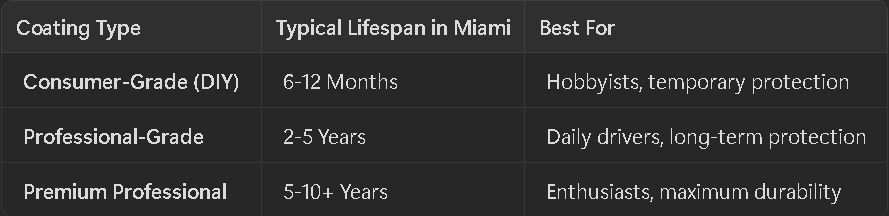
As you can see, while a DIY coating might offer a temporary boost in shine, it simply can’t compare to the multi-year durability of a professional-grade application. A professionally installed coating from a reputable detailer like Ale’s Mobile Detailing is an investment in your vehicle’s long-term health and appearance.
Factors That Influence Ceramic Coating Longevity in Miami
Achieving a multi-year lifespan isn’t just about the coating itself. Several critical factors come into play, especially in our demanding climate.
1.Quality of the Coating: Professional coatings have a higher concentration of Silicon Dioxide (SiO2), the primary ingredient that provides hardness and durability. Consumer products are formulated for easier application and have a lower SiO2 content, resulting in a shorter lifespan.
2.The Prep Work is Everything: This is the single most important factor. A ceramic coating will only bond properly to a perfectly clean and decontaminated surface. A true professional will perform a multi-stage process of washing, clay bar treatment, and, most importantly, paint correction to remove all swirls, scratches, and imperfections before the coating is even considered.
3.Your Driving & Parking Habits: A car that is garage-kept will naturally have its coating last longer than one parked outside 24/7 under the Miami sun. Similarly, a car that sees heavy highway miles will be exposed to more road debris and contaminants.
4.Maintenance Routine: A ceramic coating is not a force field. While it makes your car easier to clean, it still needs to be washed regularly and properly. Using harsh chemicals or abrasive automatic car washes can degrade the coating over time.
How to Maintain Your Ceramic Coating for Maximum Lifespan
Protect your investment by following these simple maintenance tips:
•Wash your car every 1-2 weeks using the two-bucket wash method to prevent scratches.
•Use a pH-neutral car shampoo that is specifically designed for coated vehicles.
•Avoid automatic car washes with their harsh brushes and aggressive chemicals.
•Apply a ceramic booster or topper spray every few months to rejuvenate the hydrophobic properties and add another layer of protection.
Is Ceramic Coating Worth It for a Miami Car Owner?
Absolutely. For anyone serious about protecting their vehicle from the harsh Florida climate, a professional ceramic coating is one of the smartest investments you can make. It provides superior, long-term protection that wax and sealants can’t match, keeps your car looking glossy and new for years, and ultimately protects its resale value.
Trust the Experts at Ale's Mobile Detailing
At Ale’s Mobile Detailing, we specialize in providing Miami car owners with the highest quality professional ceramic coating services. We understand the unique challenges of our local climate and use only premium-grade coatings combined with meticulous, multi-stage paint correction to ensure a flawless finish and maximum durability. We don’t just apply a product; we deliver a comprehensive paint protection solution tailored to your vehicle.
Ready to give your car the ultimate protection it deserves? Contact Ale's Mobile Detailing today for a free quote on our professional ceramic coating services and experience the difference for yourself!
Reclaim Your Time: Why Mobile Car Detailing is a Game-Changer for Busy Miami Professionals
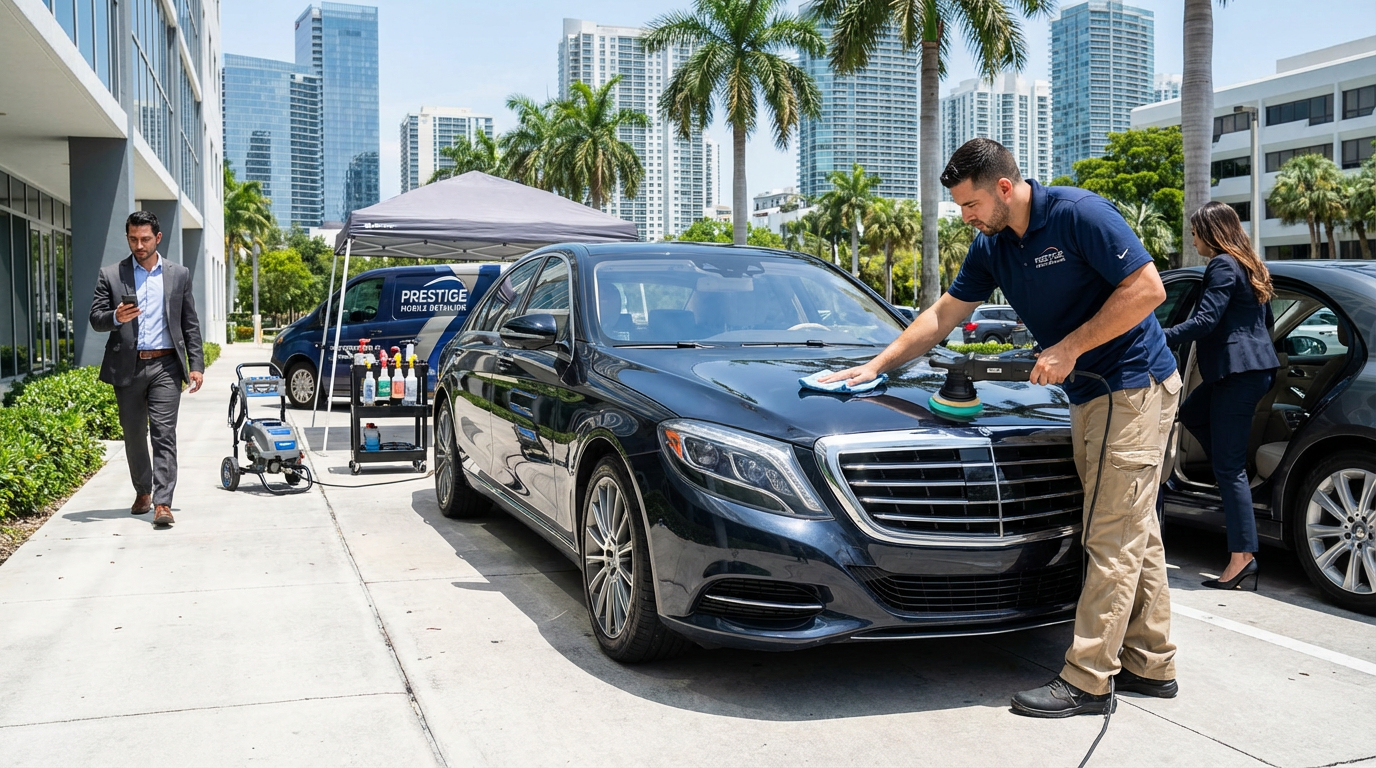
Miami is a city that never stops. Between demanding careers, navigating the notorious traffic on I-95, and trying to squeeze in a semblance of a social life, who has time to wait in line at a car wash? For busy professionals, time is the ultimate luxury, and every minute counts. Yet, driving a clean, well-maintained car is not just a matter of pride; it's a reflection of your professional image. So, how do you balance the need for a pristine vehicle with a schedule that's already stretched to its limits? The answer is simpler than you think: mobile car detailing.
This isn't just about getting your car washed; it's about reclaiming your most valuable asset—your time. Instead of sacrificing your Saturday morning or trying to rush to a detailing shop after work, imagine a professional service that comes to you, whether you're at the office in Brickell, working from your home in Coral Gables, or even parked at the marina. At Ale's Mobile Detailing, we've built our business around this very concept, providing a superior, convenient car care solution designed for the modern Miami lifestyle.
The Problem with Traditional Car Washes in Miami
Let's be honest, the traditional car wash model is broken, especially for a city like Miami. It requires you to conform to its schedule and location, creating a series of frustrating hurdles:
•The Drive: First, you have to battle the traffic just to get there. A seemingly short trip can easily turn into a 30-45 minute ordeal, adding unnecessary stress and wasted fuel to your day.
•The Wait: Once you arrive, you're greeted by a line of other cars. You could be waiting for 20 minutes, an hour, or even longer, all for a service that often feels rushed and impersonal.
•The Subpar Results: Automated car washes use harsh brushes and aggressive chemicals that can create swirl marks and damage your paint over time. Even hand-wash services at a fixed location can be inconsistent, with workers rushing to get to the next car in line.
•The Inconvenience: Your car is a necessity. Being without it while it's being serviced, or having to sit in a less-than-comfortable waiting room, is a major disruption to your productivity and your day.
When you add it all up, a simple car wash can easily consume two to three hours of your valuable time. For a busy professional, that's time that could have been spent on a conference call, preparing for a presentation, or simply decompressing after a long week.
The Mobile Detailing Revolution: A Superior Service That Comes to You
Mobile car detailing flips the traditional model on its head. Instead of you going to the service, the service comes to you. It's a simple yet revolutionary concept that offers a wealth of benefits perfectly suited for the demanding lives of Miami's professionals.
Unparalleled Convenience and Time-Saving
This is the number one reason why our clients choose mobile detailing. We can service your vehicle while you continue with your day, completely uninterrupted.
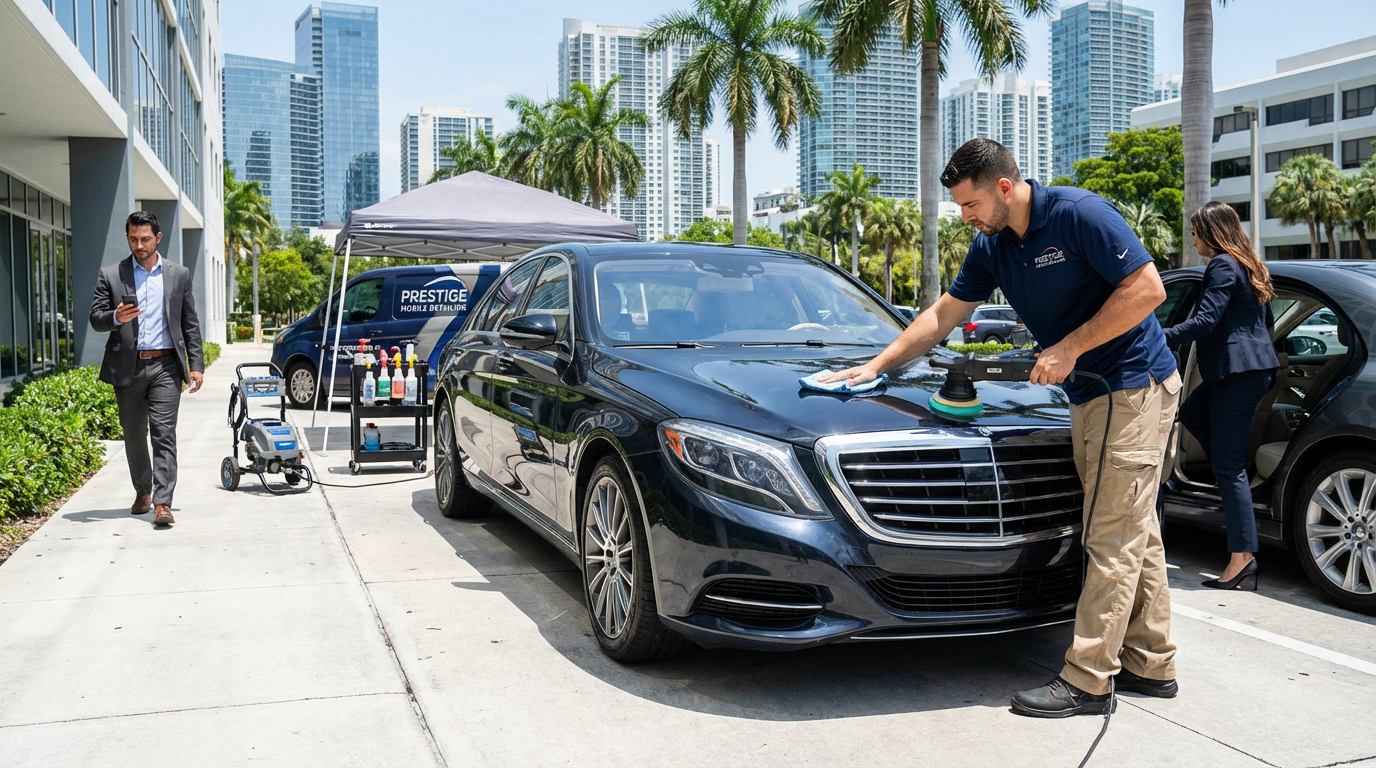
Imagine this: You drive to your office in the morning. While you're in meetings and closing deals, a professional detailer is meticulously cleaning, polishing, and protecting your car in the parking lot. When you walk out at the end of the day, you're greeted by a vehicle that looks and feels brand new. No time wasted, no disruption to your workflow. That's the power of mobile detailing.
Personalized, One-on-One Service
With mobile detailing, you're not just another car in a long line. You have direct communication with the detailer working on your vehicle. You can point out specific areas of concern, ask questions, and be confident that you're getting a service tailored to your specific needs. This one-on-one relationship ensures a level of quality and attention to detail that is simply not possible at a high-volume car wash.
Superior Quality and Attention to Detail
Mobile detailers are not just car washers; they are skilled technicians who take immense pride in their craft. We use high-quality, pH-neutral products and proven techniques to ensure a safe and effective clean. Unlike automated washes, we don't use harsh brushes that can scratch your paint. Every inch of your vehicle, from the wheels to the roof, is cleaned with precision and care. The result is a deeper, longer-lasting clean and a level of shine that a traditional car wash can't replicate.
Flexible and Adaptable to Your Location
Our mobile detailing units are fully equipped with their own water and power sources, meaning we can service your vehicle almost anywhere. We regularly work in:
•Office building parking garages
•Residential driveways and apartment complexes
•Marinas and yacht clubs
•Private event venues
This flexibility means you can get your car detailed wherever it's most convenient for you, making it a seamless addition to your routine rather than a chore to be scheduled.
What Does a Mobile Detailing Service Include?
While a traditional car wash focuses on a quick exterior clean, a mobile detailing service is a comprehensive, bumper-to-bumper rejuvenation for your vehicle. At Ale's Mobile Detailing, our packages are designed to restore your car to showroom condition. A typical service can include:
•Exterior Detailing: A meticulous hand wash and dry, clay bar treatment to remove contaminants, polishing to remove swirl marks and light scratches, and the application of a high-quality wax or sealant for protection and shine.
•Interior Detailing: Thorough vacuuming of carpets and upholstery, deep cleaning and conditioning of leather seats, cleaning and dressing of all plastic and vinyl surfaces, and streak-free cleaning of all windows and mirrors.
•Wheels and Tires: Deep cleaning of wheels to remove brake dust and grime, and application of a tire dressing for a clean, satin finish.
We also offer specialized services like ceramic coatings, paint correction, and pet hair removal to meet the unique needs of our clients.
Make the Smart Choice: Invest in Your Time and Your Vehicle
In a city where time is money, mobile car detailing isn't a luxury; it's a smart investment in your productivity and your peace of mind. It's a service that respects your time, delivers superior results, and simplifies your life.
If you're a busy Miami professional who demands the best, it's time to experience the difference of a premium mobile detailing service. Stop wasting your valuable time at the car wash and let the experts at Ale's Mobile Detailing bring the car spa to you.
Ready to reclaim your time? Contact Ale's Mobile Detailing today to book your first appointment and discover the ultimate convenience in car care.
Ceramic Coating vs. Wax: Which Paint Protection is Right for Your Car in Miami?
The Pros of Car Wax:
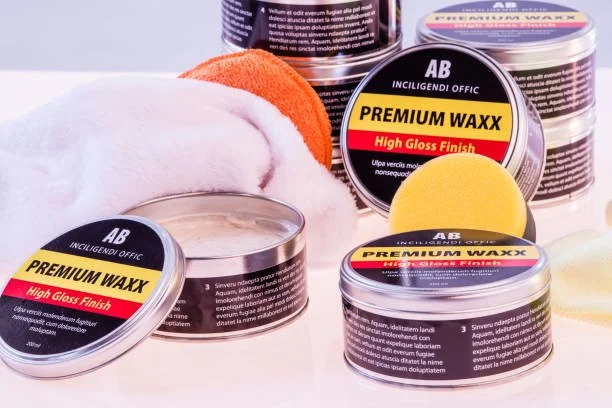
•Deep, Warm Glow: Wax is renowned for providing a rich, deep shine that many enthusiasts love. It gives the paint a wet, glossy look that enhances its color and depth.
•Affordability: Compared to ceramic coatings, waxing is a significantly more budget-friendly option, both for DIY application and professional services.
•Ease of Application: Applying wax is a straightforward process that many car owners can do themselves with minimal equipment.
The Cons of Car Wax in Miami:
•Lack of Durability: This is the biggest drawback. A typical wax application lasts only a few weeks to a couple of months. In the intense Miami heat and frequent rain, this lifespan is often even shorter as the wax quickly degrades and washes away.
•Minimal Protection: While wax offers some protection against UV rays and contaminants, the layer is very thin and offers little resistance to chemical etching from bird droppings, bug splatter, or hard water spots.
•Frequent Reapplication: To maintain protection and shine, waxing needs to be a regular part of your car care routine, requiring significant time and effort over the long run.
What is a Ceramic Coating?
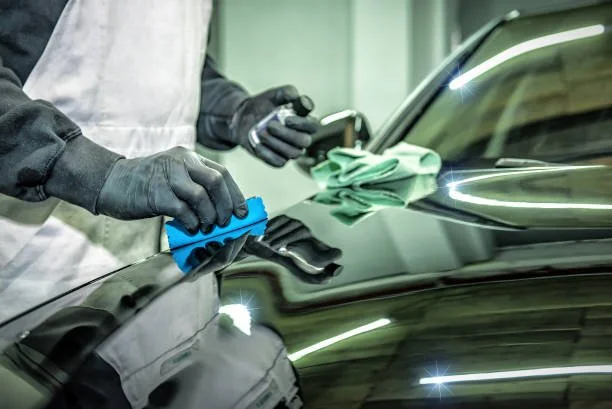
A ceramic coating is a liquid polymer, or Si02 (silicon dioxide), that is professionally applied to a vehicle's exterior. Unlike wax, a ceramic coating creates a chemical bond with your car’s factory paint, forming a semi-permanent, rigid, and transparent layer of protection. Think of it not as a layer that sits on the paint, but as a new, harder, and more durable top layer that becomes one with the paint.
The Pros of a Ceramic Coating:
•Unmatched Durability: This is where ceramic coatings truly shine. A single professional application can last anywhere from two to five years or even longer, depending on the quality of the product and how it's maintained.
•Superior Protection: The hardened layer provides exceptional resistance to UV rays (preventing oxidation and fading), chemical stains, and etching. This is critical for protecting against Miami's salt air, acidic rain, and bird droppings.
•Hydrophobic Properties: Ceramic coatings are intensely hydrophobic, meaning they repel water at an extreme level. Water beads up and rolls off the surface, taking dirt and grime with it. This not only keeps your car cleaner for longer but also makes washing it significantly easier.
•Enhanced, Candy-Like Gloss: A ceramic coating creates a sharp, candy-like gloss that enhances the clarity and reflectivity of the paint, making it look perpetually clean and new.
The Cons of a Ceramic Coating:
•Upfront Cost: The biggest barrier for most is the initial investment. A professional ceramic coating is a premium service that requires extensive paint preparation and meticulous application, making it significantly more expensive than a traditional wax service.
•Application Process: Proper application is critical for performance and longevity. It requires a multi-stage process of washing, decontamination, and paint correction to ensure the surface is perfectly clean and smooth before the coating is applied. This is a job best left to trained professionals.
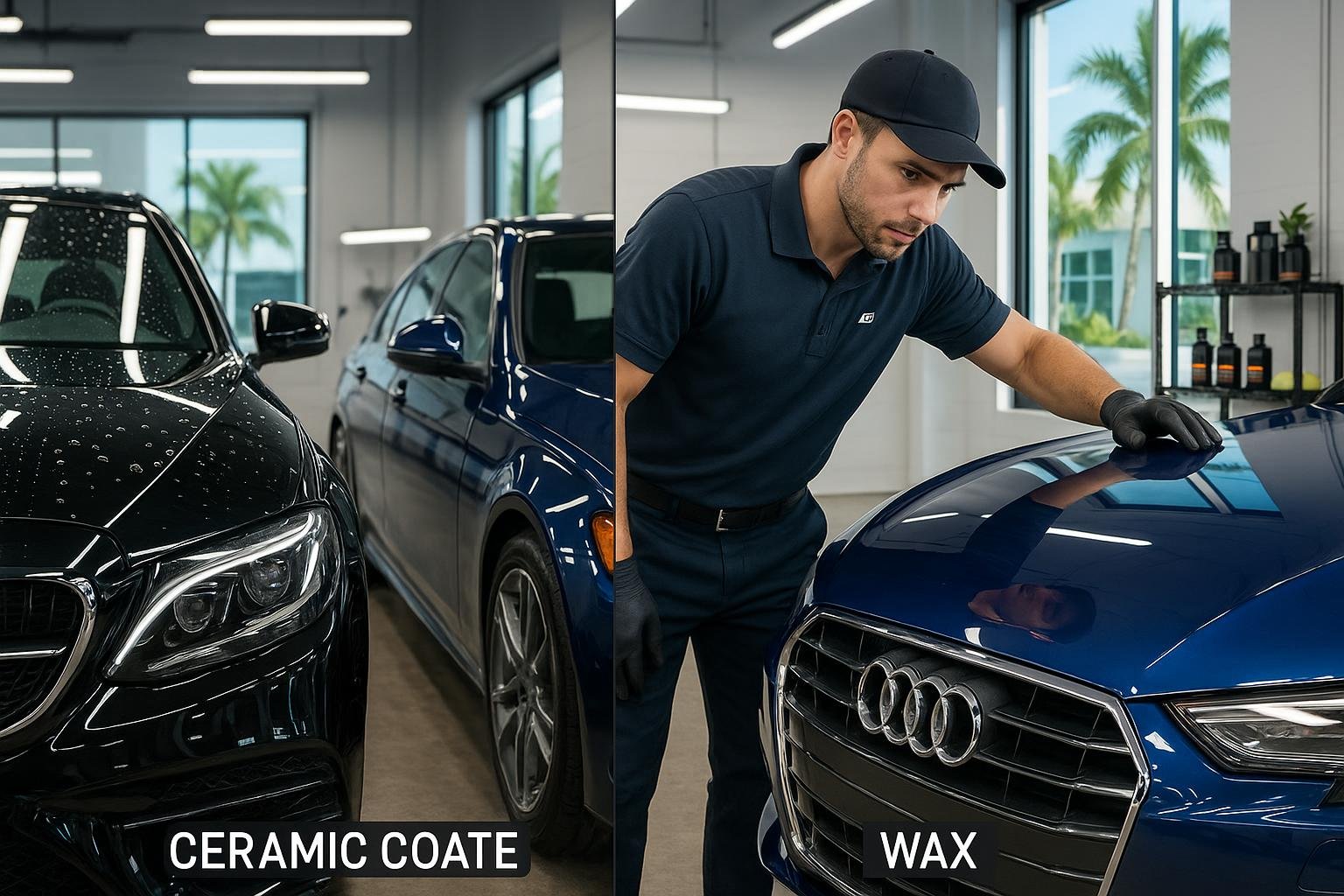
When it comes to protecting your car’s paint and keeping it looking glossy and new, two options dominate the conversation: traditional car wax and modern ceramic coatings. For car owners in Miami, where the sun, salt, and humidity wage a relentless war on vehicle surfaces, choosing the right protection is not just about aesthetics—it's about preserving your investment. But with a flood of information out there, it can be difficult to know which is truly the better choice.
As Miami's premier mobile detailing specialists, we at Ale's Mobile Detailing have seen the effects of our climate on every type of vehicle finish. This guide will break down the essential differences between ceramic coatings and wax, helping you make an informed decision that best suits your car, your lifestyle, and your budget.
What is Traditional Car Wax?
For decades, car wax has been the go-to solution for achieving a brilliant shine and a basic layer of protection. Waxes are typically made from a blend of natural carnauba wax, beeswax, and synthetic polymers. They work by filling in microscopic imperfections in your car's clear coat and creating a thin, sacrificial layer that sits on top of the paint.
The Verdict: Which is Right for Your Miami Vehicle?
For the vast majority of car owners in Miami, a professional ceramic coating is the superior long-term investment. The relentless sun, salt, and humidity in our environment demand a level of protection that traditional wax simply cannot provide. While the upfront cost is higher, the long-term value, peace of mind, and reduced maintenance effort make it the clear winner for preserving your vehicle's paint and resale value.
A ceramic coating provides a durable shield that stands up to the elements year-round, keeping your car looking its best with far less effort. You'll spend less time waxing and more time enjoying the pristine, glossy finish that a coating provides.
However, car wax still has its place. If you are a dedicated enthusiast who genuinely enjoys the hands-on process of waxing your car every few weeks, or if you are working with a tighter budget, a high-quality wax can still provide a beautiful shine and a temporary layer of protection.
Experience the Ultimate Protection with Ale's Mobile Detailing
At Ale's Mobile Detailing, we specialize in professional-grade ceramic coatings designed to provide your vehicle with the ultimate defense against the harsh Miami climate. Our meticulous paint preparation and expert application ensure a flawless finish and years of durable protection.
Ready to give your car the long-lasting shine and protection it deserves? Contact Ale's Mobile Detailing today to learn more about our ceramic coating packages and to book your appointment!